Wednesday, September 11, 2019

Black Skimmer

There are three species of skimmer, formerly known as scissorbills (for good reason). They have uneven bills, with a lower mandible longer than the upper mandible, which look like scissors. The bill allows them to fly low over the water and use the lower mandible to skim the surface of the water and snap up fish. The three species of skimmers belong to the genus Rynchops. In addition to the black skimmer, subject of this post, there is an African skimmer and an Asian skimmer.

The black skimmer (Rynchops niger) has three subspecies: (a) R. n. niger, the nominate subspecies, which I saw, which breeds on the Atlantic coast of North America and in the Pacific from southern California to Ecuador; (b) R. n. cinerescens, which breeds in northern and northeastern South America and the Amazon basin; and (c) R. n. intercedens, found on the rest of the Atlantic coast of South America south to central Argentina. 
Black skimmer range map from Wikipedia: (a) light blue is nonbreeding (not seeing any of that); (b) orange is breeding; (c) yellow is migration (not seeing any of that); and (d) purple is year-round. Where we were, in southern Texas, is purple. 
While breeding, they have a black crown, nape and upper body. The forehead and underparts are white. The upper wings are black with white on the rear edge. The tail and rump are dark gray with white edges. The two black skimmers in the photo are near a brown pelican. 
We saw R. n. niger in southern Texas, east of Brownsville on sand spits in the lagoon between Port Isabel and South Padre Island. We were taking photos from a motorboat in the water. 

These two black skimmers are near a laughing gull. The base of the bill is red and the balance is black. Not seen in my photos is a cat-like vertical pupil, unique for a bird. 
There were relatively few of them in comparison to the brown pelicans, Caspian terns and royal terns we were seeing. 
These 3 black skimmers are a little blurry, but the one at left front gives the best illustration of the longer lower mandible. 
It is a unique and beautiful bird I would love to see again and get photos of it flying and skimming across the water. 
This is the best photo of the red legs. 

Sunday, September 8, 2019

El Rey Del Cabrito - Monterrey, Mexico

While in Monterrey, Nuevo Leon, Mexico, my nephew, John, and I ate at El Rey Del Cabrito, which translated means "king of the kid (young) goat." John indicated that Monterrey is known for its roasted goat and that this restaurant is known throughout Mexico. 
The owner is certainly a promoter, there are signs everywhere. I didn't understand the significance of the crown on the signs until I saw the goats roasting in the front window. I then recognized that the crown has roasting goats on it. When I was taking photos at the front, one of the employees waived me inside where the goats were roasting and let me take a picture right next to them.  


Cabrito al pastor is young goat roasted on a spit over open coals (often mesquite wood). 


Later, I recognized the owner from his photo on the menu talking to one of the patrons. 

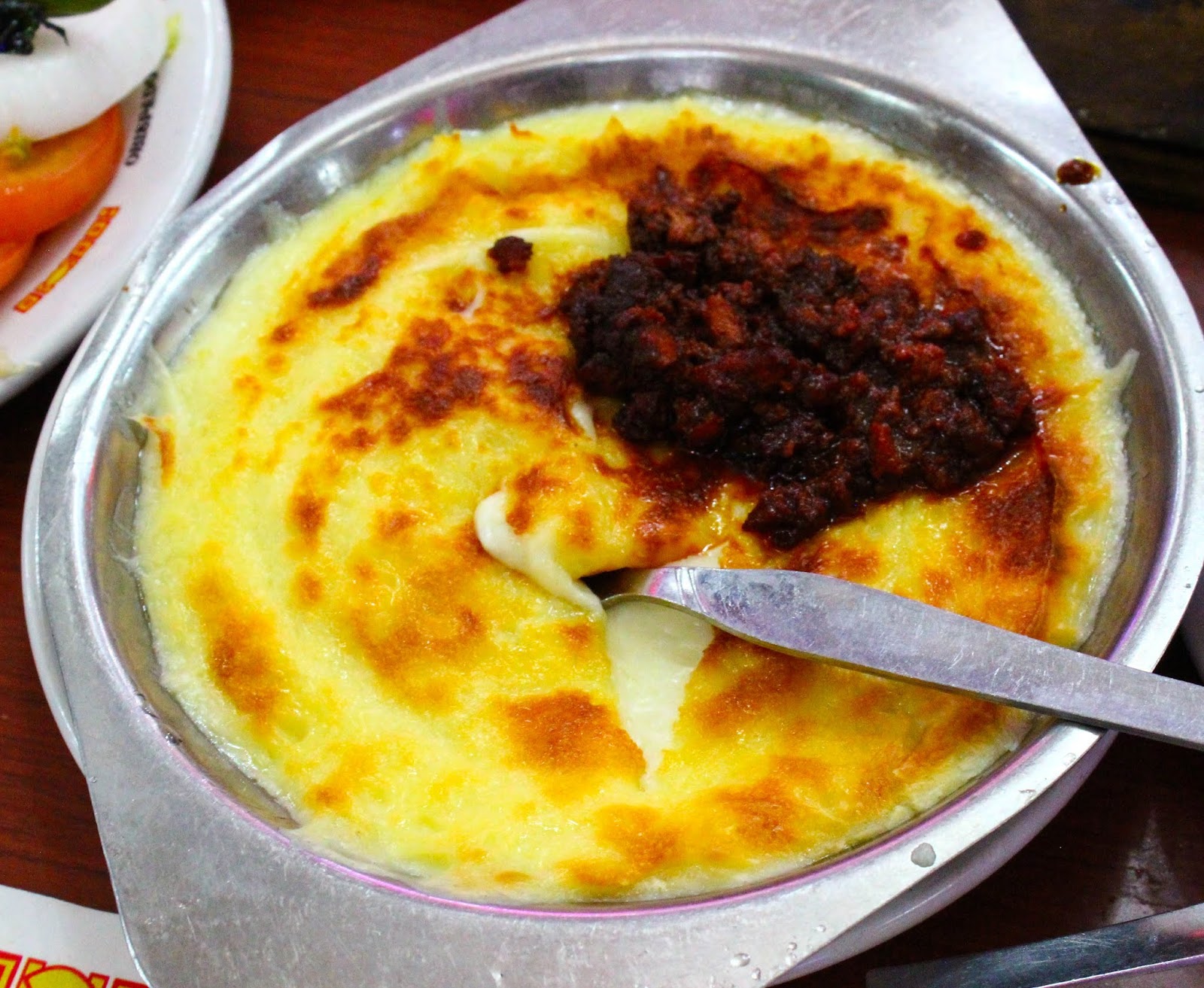
Our table came stocked with tortilla chips and two types of salsa. I ordered some broiled cheese with chorizo which was fantastic, both by itself and when added as an ingredient to a taco. They also had other taco ingredients, including a plate with some shredded lettuce, tomatoes, onion and chiles, as well as a plate of beans. 
Chips and salsas.

Fabulous broiled cheese with chorizo.
Beans
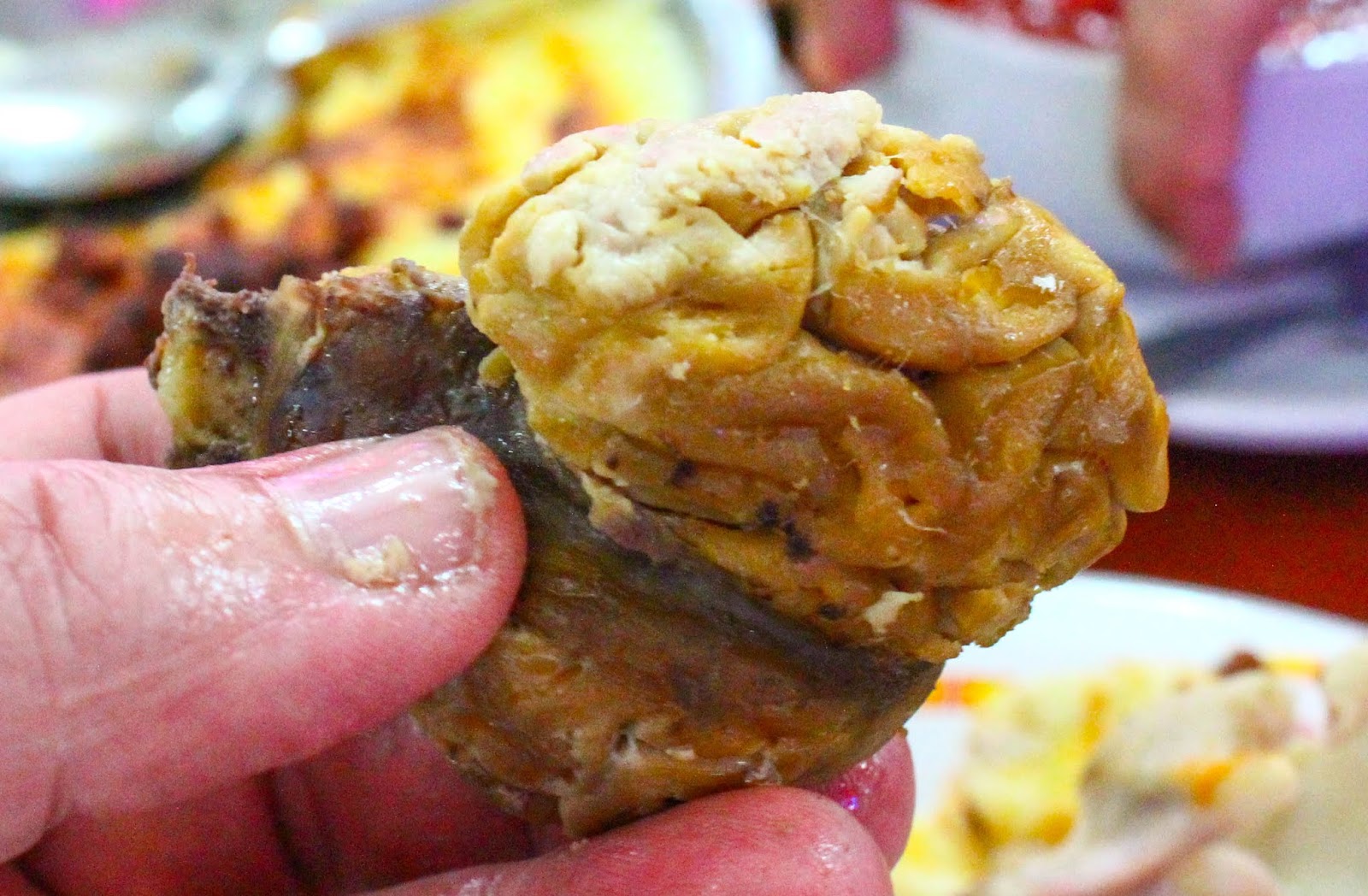
John ordered the goat. He got some goat breast, leg, shoulder and a head from which I tried the tongue, brain, eye and cheek meat. 


An eyeball.
The brain.

The breast was best, covered by the crispy skin which the marinade made very flavorful. It was wonderful by itself, as well as added to a taco. 

I've eaten goat many times, but nothing like this. I wish Judy could have been with us. She loves goat, and this was goat at its best. This was a memorable meal, one of my favorites ever. The fact that it is all goat, unabashedly so, with goat carcasses roasting in the window and plates stacked with goat at every table, made for a fun atmosphere. Then the goat, itself, was incredibly good. I find myself wanting to go there again. 

Friday, September 6, 2019

Common Bottlenose Dolphin

The common bottlenose dolphin, or Atlantic bottlenose dolphin, is the kind of dolphin featured in the show Flipper which I watched as a youth. They are found in warm and temperate seas worldwide. They are gray, between 6.5 and 13 feet long, and weigh 330 to 1,430 pounds. The name "bottlenose" comes from the snout that looks like an old-fashioned gin bottle. However, the snout does not function as a nose, they breath through a blow-hole on the top of their head, like a whale. 
We learned that they can distinguish individual dolphins by the fin on the back. This one has frayed edges. I can't tell if the fraying is something external to the dolphin, like barnacles or seaweed, or a deterioration of the fin.  
I was with my nephew John on a trip through northeastern Mexico and we ventured north of the border into southern Texas. Outside Brownsville, in Port Isabel, just before the bridge over to South Padre Island, we visited the Dolphin Research and Sealife Nature Center, run by a husband and wife team, and took a small motor boat out into the lagoon between the mainland and South Padre Island to look for dolphins. 


There were five of us on the boat and two small dogs. We encountered two very large boats out in the lagoon also carrying passengers looking for dolphins, and I was happy to be on the small boat, much closer to the water and we did get very close to the dolphins, at times underwater right next to the boat.  


I didn't get any great photos, no dolphins leaping out of the water, or sticking their heads out of the water to look at us, but I did get some photos with recognizable head shots of dolphins and the adventure was well-worth the $25 we each spent for an hour and a half on the water. I compare this much more intimate experience with our experience seeing white-beaked dolphins in Iceland, on a much larger boat, and would take this experience any day. 

Wednesday, September 4, 2019

Northern Crested Caracara

The northern crested caracara, also known as the crested caracara, has a black body, wings, crest and crown; white neck, rump and wing patches; a white tail and breast with black barring and the tail has a broad terminal band; the bill is thick, gray and hooked; the facial skin is yellow to orange red, depending on age and mood; and the legs are yellow. 
This young adult caracara takes flight in the early morning light. 
The same bird standing on the ground. 
Immature birds are more brown; have a buff neck and throat; a pale breast streaked or mottled with brown; grayish white legs; and grayish or dull pinkish purple facial skin. 
This youngster looks like it just barely left the nest. 
The youngster in flight. 
A juvenile on a yucca plant or joshua tree.
They are found in small portions of the southern U.S., including portions of southern Arizona, Texas and south/central Florida. It is much more widely distributed in Mexico through Central America and down into northern South America. 
Distribution of the northern crested caracara from Wikipedia. 
I recall looking at pictures of the caracara in my youth and wanting to see them. More recently, I saw pictures of them from Puerto Penasco, Sonora, Mexico; Melbourne, Florida; and Big Bend National Park in Texas and hoped to no avail to see them while visiting those areas. 

On a recent visit to northeastern Mexico with my nephew, John, I expressed my interest in seeing a caracara. On a long stretch of open country between Zacatecus and San Luis Potosi we spotted several from our car. One in particular had the unmistakable reddish facial skin I could see as it flew along parallel to our car. These were the dark adults with the more colorful facial skin. After spending the night in San Luis Potosi, with a long drive to Ciudad Victoria the next day, I put my 500 mm lense on my camera and placed it on the back seat of the car in the hope that we might see another caracara on our drive and somehow be in a position to photograph it. 
More photos of the first caracara in flight. 

Fortunately, several opportunities arose. The first was on a very nice toll road, early in the morning, where we were virtually alone. I spotted a caracara standing on the ground next to a bridge over the road. I stopped, backed up the car and got a number of photos as it stood on the bridge, then flew to a spot in the distance and finally flew away. 
About 30 minutes later I spotted another caracara standing on the other side of the road. I stopped, did a u-turn, then pulled up behind it and then got out of the car. It was a very brown juvenile. It flew to a place where there were several more caracaras. I'm guessing that they had just recently left their nests as I spotted mama standing at some distance watching them and me. 
Mama caracara.
This was a thrill. My photos are not the best and I would liked to have gotten better photos of an adult, but just seeing them in the wild was worth the hassle of bringing my long telephoto lens on the trip.