Wednesday, July 19, 2023

Eastern Wood-Pewee

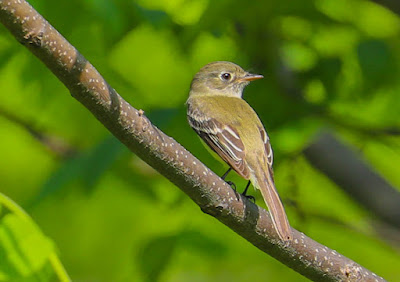
The eastern wood-pewee is very similar looking to the least flycatcher which I just posted on yesterday. It is also a small flycatcher. It is differentiated from the least flycatcher by having a much less bold white eye ring, is larger, has a larger bill and different songs and calls. 
Eastern wood-pewee in Central Park. 


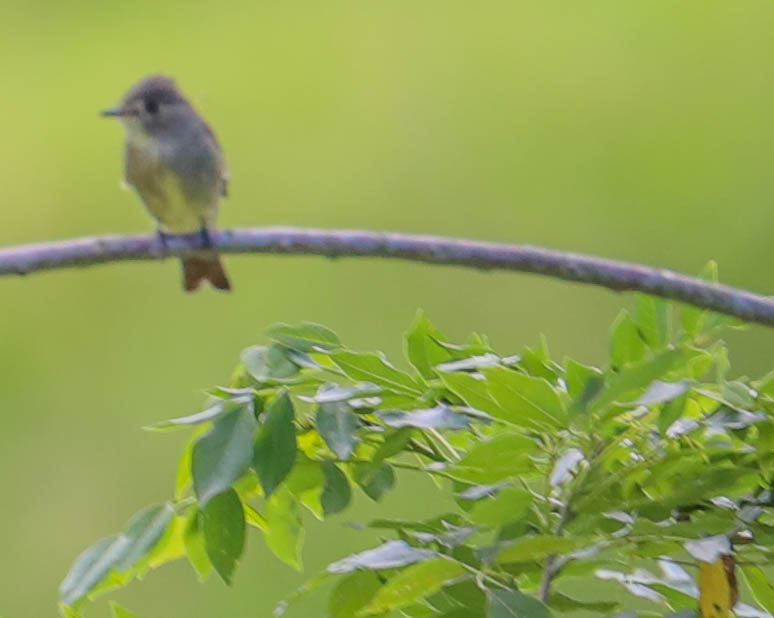
It is also very difficult to distinguish from the western wood-pewee, except by range and song. In fact, they used to be considered the same species. I saw either an eastern or western wood-pewee at Tinamu Reserve in Colombia in March, an area where both species are found, and labeled it an eastern wood-pewee. No one has tried to identify it on iNaturalist. 
Eastern wood-pewee range from Wikipedia.

A wood-pewee in Colombia which is either an eastern or western. 


Tuesday, July 18, 2023

Least Flycatcher

I took a bird walking trip in Central Park in New York City in May and saw a least flycatcher for the first time. It is the smallest flycatcher in eastern North America and was standing in a very tall tree quite a distance from us. Despite others in our group describing where it was in the tree, it took me quite a while to pick it out. 
DNA analysis reveals that it has no close relatives. It is dull olive-gray on the back and whitish on the belly, although I see other photos of it with some yellow, like the one I photographed. It has two white bars on its wings and a white ring around each eye. The lower mandible of the bill is yellowish. 
As the range map shows, it is found in much of Canada and the northern U.S. and migrates to Mexico and Central America for the winter. Based on the map, I was probably seeing one migrating north. 
Least flycatcher range from Wikipedia.

Monday, July 17, 2023

Central Park - New York City

On May 12 Judy and I were in New York City to visit one of our sons and his girlfriend. They suggested we go on a bird walk with Birding Bob, but that day led by Deborah Allen. We met at 8:30 a.m. on the north side of the Conservatory Garden which is at 106th Street and 5th Avenue on a path some ways into the Park. We were to walk around the Harlem Meer, then to the North Woods, Wildlife meadow, then the Loch and finish on the west side of the Harlem Meer about 125 yards from the #2 and #3 train station at 110th Street. 

Wikipedia notes that Central Park is 843 acres (2.5 miles from north to south and .5 miles from west to east) and gets 42 million visitors a year as of 2016, the most visited urban park in the U.S. I'm stunned to learn it is only the fifth largest park in NYC (Pelham Bay Park in the Bronx is 2,765 acres, Greenbelt on Staten Island is 1,778 acres, Van Cortlandt Park in the Bronx is 1,146 acres and Flushing Meadows/Corona Park in Queens is 898 acres). The Harlem Meer is an 11 acre man-made lake at the northeast corner, west of Fifth Avenue, south of 110th Street and north of the Conservatory Garden. The North Woods is 40 acres and the largest of Central Park's three woodland landscapes. Frederick Law Olmsted and Calvert Vaux who designed it used existing topography, which included hills and large rock outcrops, added trees and vegetation, designed water bodies, cascades, bridges and a network of paths through it. The goal was to create the impression of a rugged wilderness in the heart of the city.  The Dene Slope is a 1.25 acre native meadow with a trail that just opened to the public. It is west of the Billy Johnson Playground and south of the Balto statue. It has tall grasses and herbaceous plants and is still several years from where it needs to be to be self-sustaining. The Loch has three waterfalls and is a narrow watercourse that flows through the Ravine in the North Woods. It too was designed and built by Olmsted and Vaux in an existing valley carved out by Montayne's Rivulet. The stream was damned and widened and the valley was deepened with added plantings, bridges and cascades. 

We met with about 35 other people which was kind of unwieldly, too many people to hear the leader and lots of jockeying for good photos. But the scenery was amazing and it was the perfect time of year for migrating warblers, birds I've not seen many of.

Following are photos of birds I took on the walk. I would love to go back and do more birding. It was fantastic. 
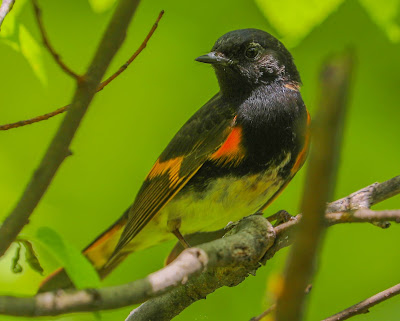
American redstart

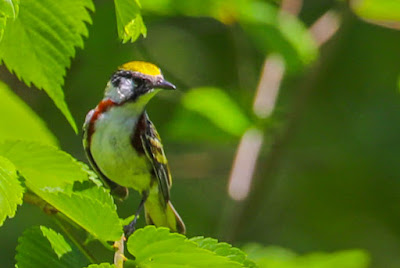
Chestnut-sided warbler (this and next)


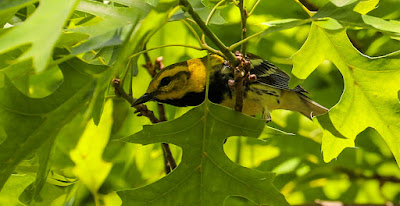
Black-throated green warbler

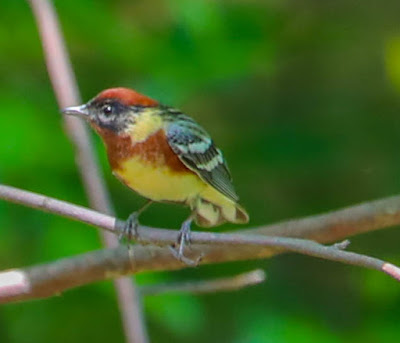
Bay-breasted warbler (this and next)


Canada warbler (this and next)


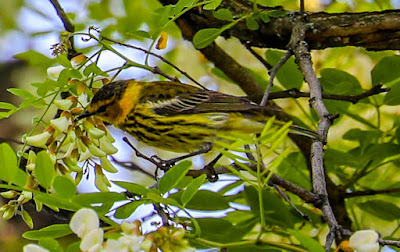
Cape May warbler (this and next)


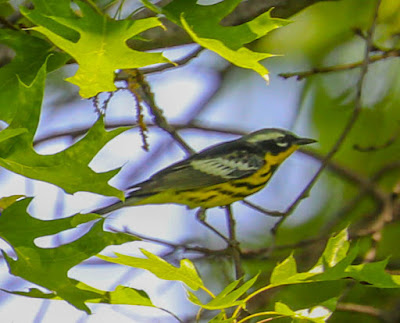
Magnolia warbler

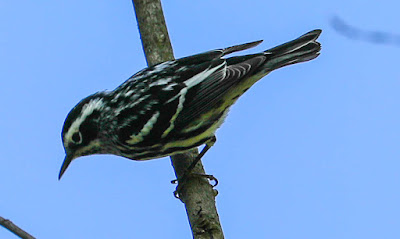
Black and white warbler (this and next)


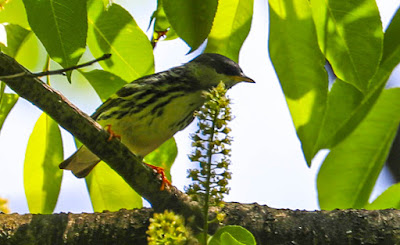
Blackpoll warbler (this and next)


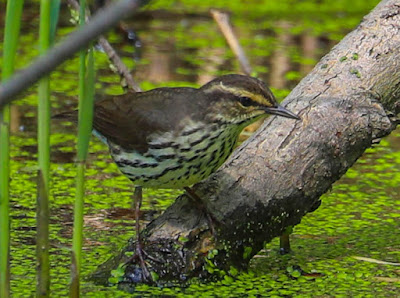
Northern waterthrush

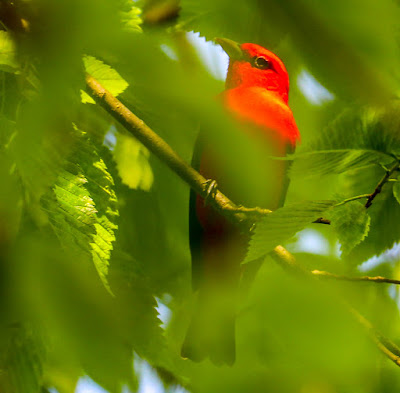
Scarlet tanager (this and next)


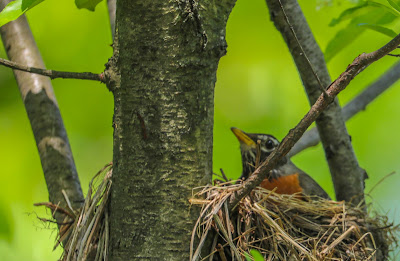
American robin (this and next)


House sparrow

Purple (common) grackle (this and next)


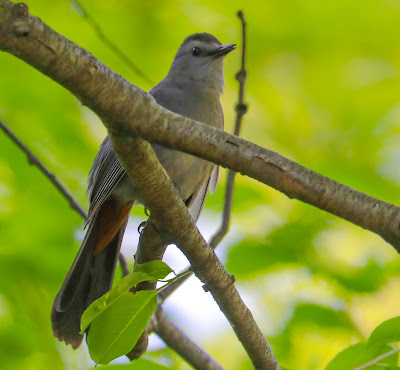
Gray catbird

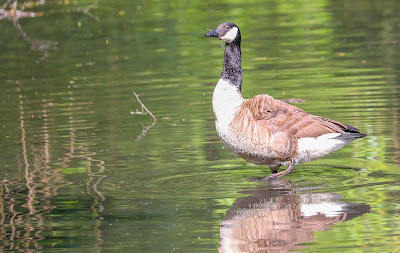
Canada goose

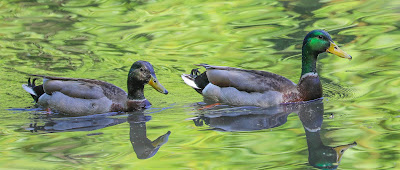
Mallard

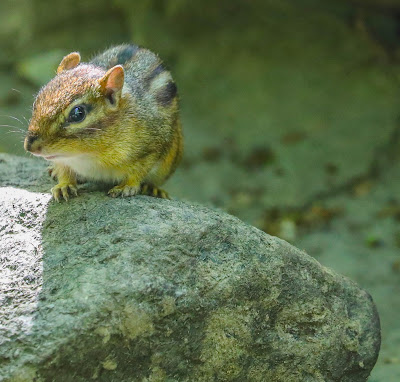
Eastern chipmunk

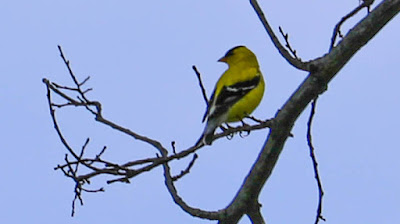
American goldfinch

Eastern wood-pewee

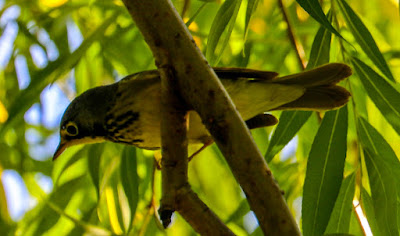
Least flycatcher

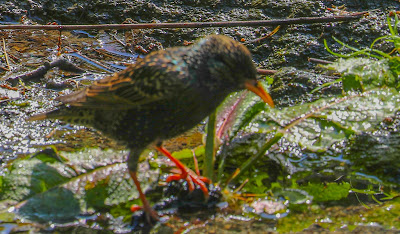
European starling

Sunday, July 16, 2023

Hotel Mockingbird Hill - Drapers, Jamaica

On February 18 of this year we were in Jamaica on a genealogical trip with my cousin Chad Cannon, researching my third great grandfather who was a slave trader in the late 18th century. We spent the previous night in Ocho Rios, then made stops at Dunn's River Falls and Park and then Konoko Falls in Ocho Rios.  
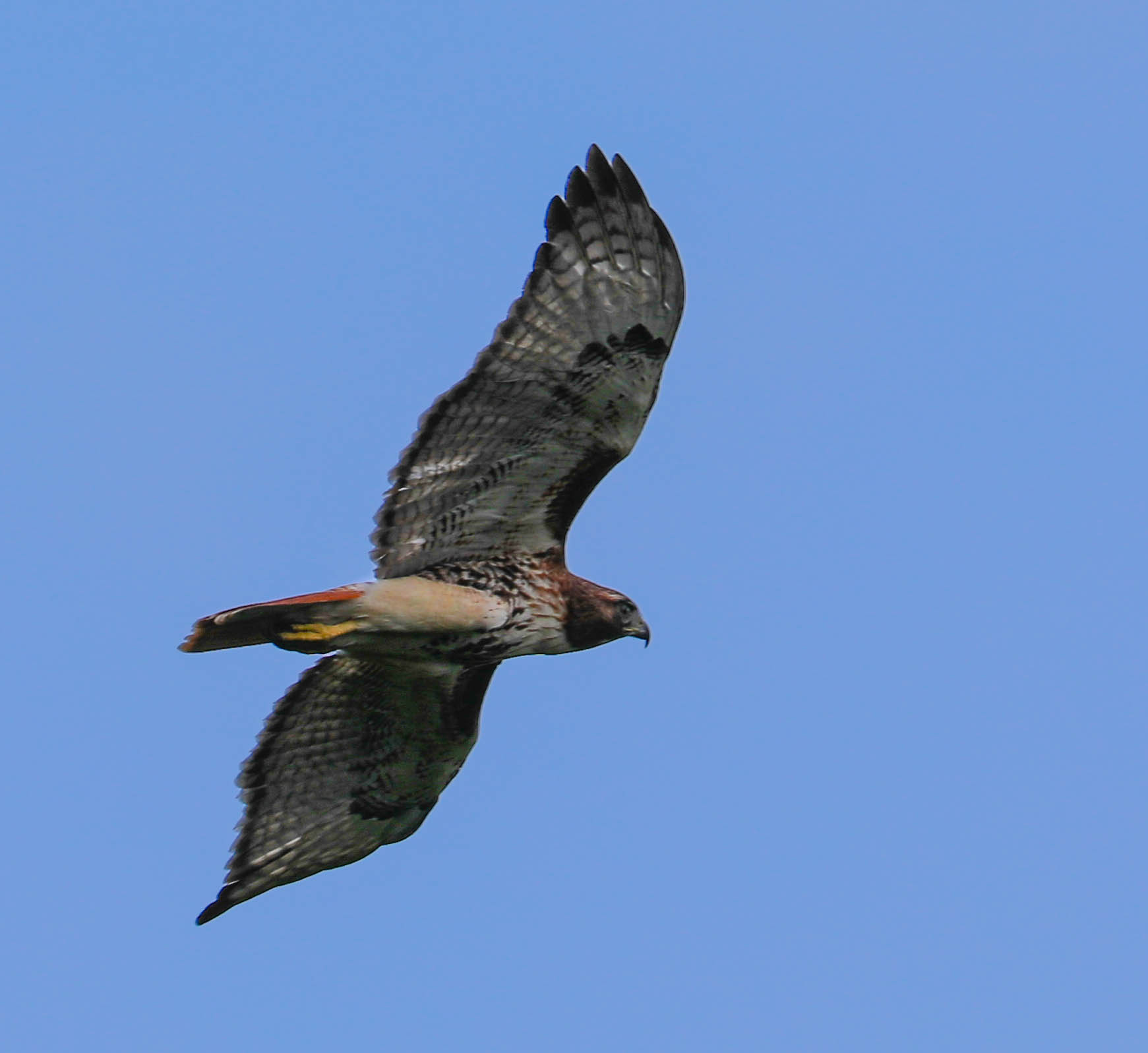
Red-tailed hawk at Knoko Falls

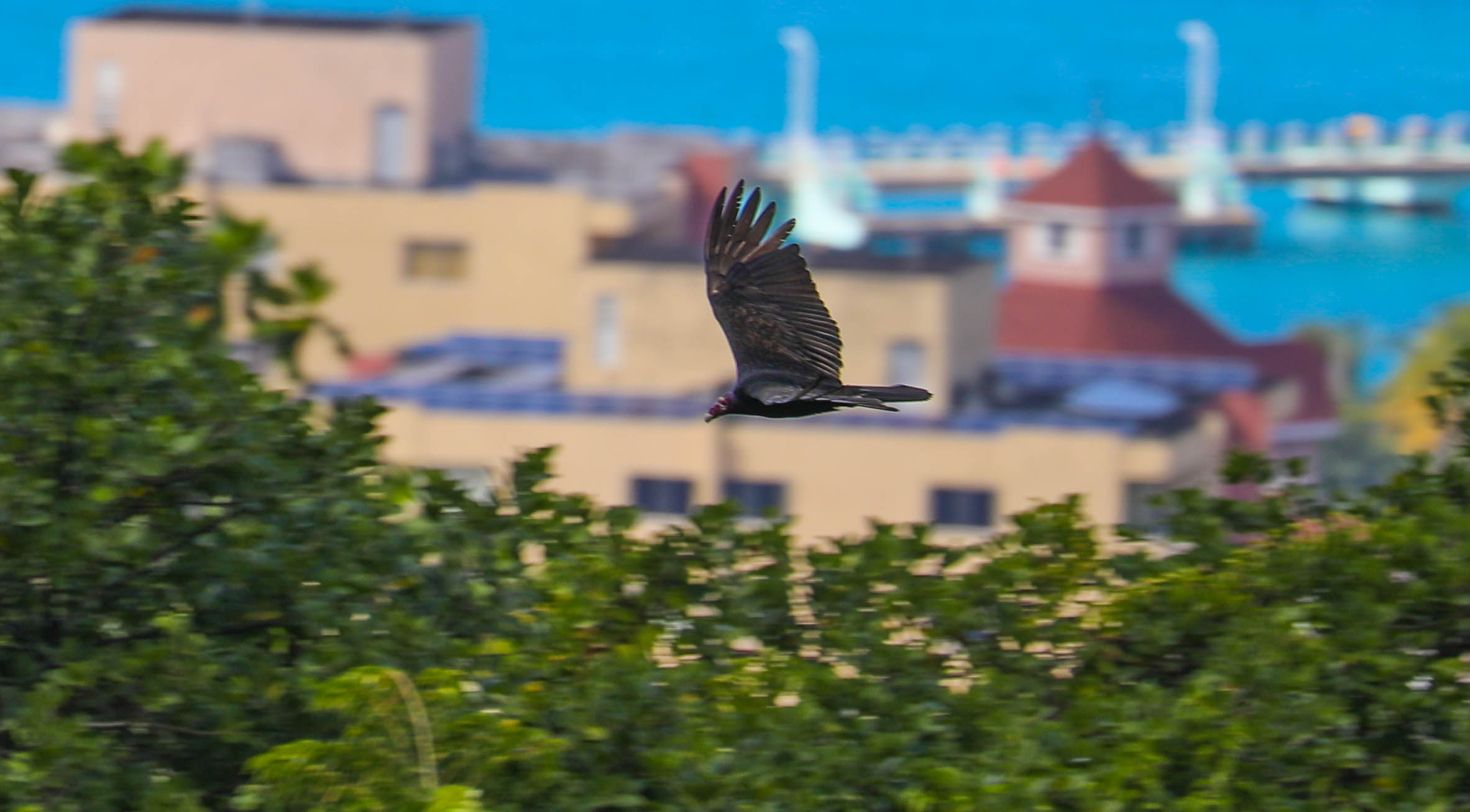
Turkey vulture at Konoko Falls
American redstart at Konoko Falls.
From there we had a 65 mile drive to Drapers, on the A3, east along the north coast, past Port Antonio, about a 2.5 hour drive. We had reservations for the night at Hotel Mockingbird Hill. In planning our trip I saw a number of posts raving about Hotel Mockingbird Hill as a fantastic accommodation and a great place for birding. Fat Birder said it was one of best birding sites in Jamaica. He noted that the gardens have hosted all but a few endemic species and subspecies and in a few days there he saw more than a dozen endemics, most from the restaurant. It has glorious gardens and stunning natural scenery. Surfbirds called it “an internationally renowned, upscale boutique establishment” with a “bird-filled garden” that is “dove heaven.” The hotel’s extensive garden, along with Cinchona, was the birdiest site they saw in Jamaica in a six day trip. 

We arrived at Hotel Mockingbird Hill about 6:00 p.m. and were shown to our wonderful room and had a fantastic meal. See Judy's post on it here
 
I made reservations beforehand with Ricardo Miller of Arrowhead Birding to have a guide meet us at the hotel the next morning, February 19, to bird at Mockingbird Hill, then San San, then back to Kingston on the Buff Bay to Kingston Road through Blue and John Crow Mountains National Park, to New Castle. Lyndon Johnson was assigned to us as our birding guide. “Mockingbird Hill Hotel” is no. 13 on eBird for Jamaica with 115 species. “San San Police Station Road” is no. 56 on eBird with 77 species observed.
 
Lyndon met me in the dark about 4:30 a.m. We walked around the front grounds looking for owls and potoos, unsuccessfully, then drove to San San, a 1.25 mile and 8 minute drive, a small preserve behind a police station that has many of the same species of birds as Ecclesdown, a top birding sight in Jamaica. There he played calls for owls and potoos and we heard both respond, but got no sightings. We eventually headed back to Hotel Mockingbird Hill and walked the grounds much more successfully. I had lunch at the hotel. 
Bananaquit

Black-tailed streamertail (here and next)


Chestnut-bellied cuckoo (here and next two)


Common ground dove

Greater Antillean grackle

Jamaican lizard cuckoo (here and next)


Ring-tailed pigeon

Rufous-tailed flycatcher

Sad flycatcher

White-chinned thrush (here and next two)


White-crowned pigeon (here and next)

Then Chad joined Lyndon and I for another trip to San San, this time in the daylight. 
Green-rumped parrotlet (here and next)


Jamaican oriole (here and next)


Jamaican tody (here and next)


Jamaican woodpecker

Ring-tailed pigeon
After we came back to the hotel we gathered our belongings and made the drive through the Blue Mountains, a hair-raising drive along steep and narrow roads with a memorable stop with a hike up the side of a mountain to a shack inhabited by a person that Lyndon had made prior arrangements with, where we saw some wonderful birds.  
Crested quail-dove (here and next)


Jamaican pewee

Jamaican tody

Red-billed streamertail

Ring-tailed pigeon (here and next) - from a stop along the side of the road relatively close to Newcastle.

We eventually made it back to Kingston where we had a hotel for the night.