Sunday, December 18, 2022

Mojave Narrows Regional Park - California

The Mojave Narrows is a long gorge with granite walls and is where the underground Mojave River comes to the surface near Victorville, California. An area which used to be known as the North Verde Ranch, then the Kemper Campbell Ranch, was purchased by San Bernardino County in the 1960s and converted into Mojave Narrows Regional Park. The 886 acre park has two small lakes, creeks, bogs, ponds, cottonwoods, willow thickets, and green meadows and is a wonderful area for birds. 
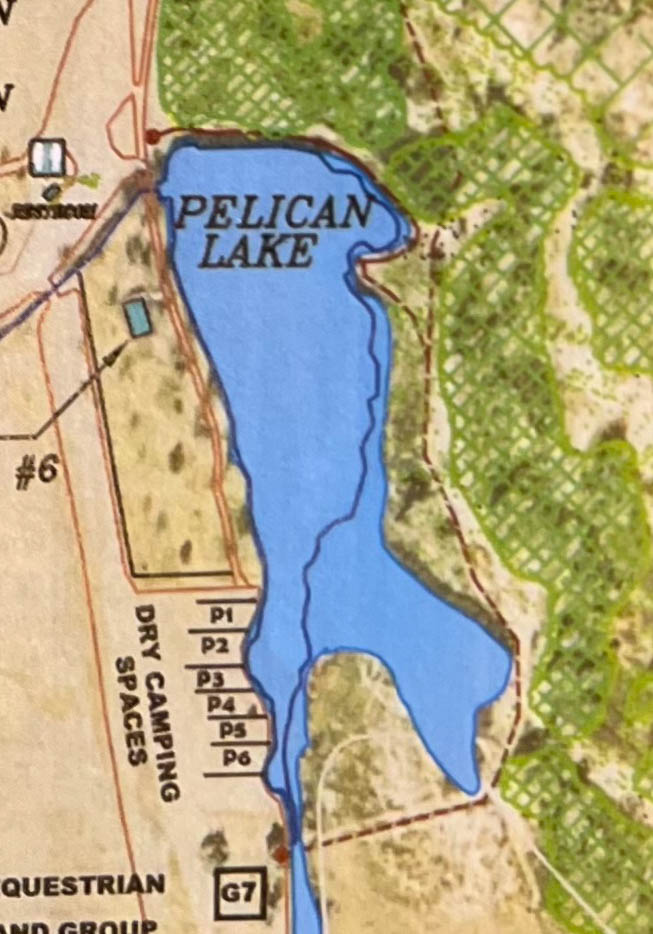
Mojave Narrows Regional Park map
I visited for the first time on December 10, 2022 and went back a week later on December 17. Year-round fishing is available on Horseshoe Lake and the much smaller Pelican Lake. 
Pelican Lake is heavily populated by fishermen and does not appear to be a good place for bird spotting.


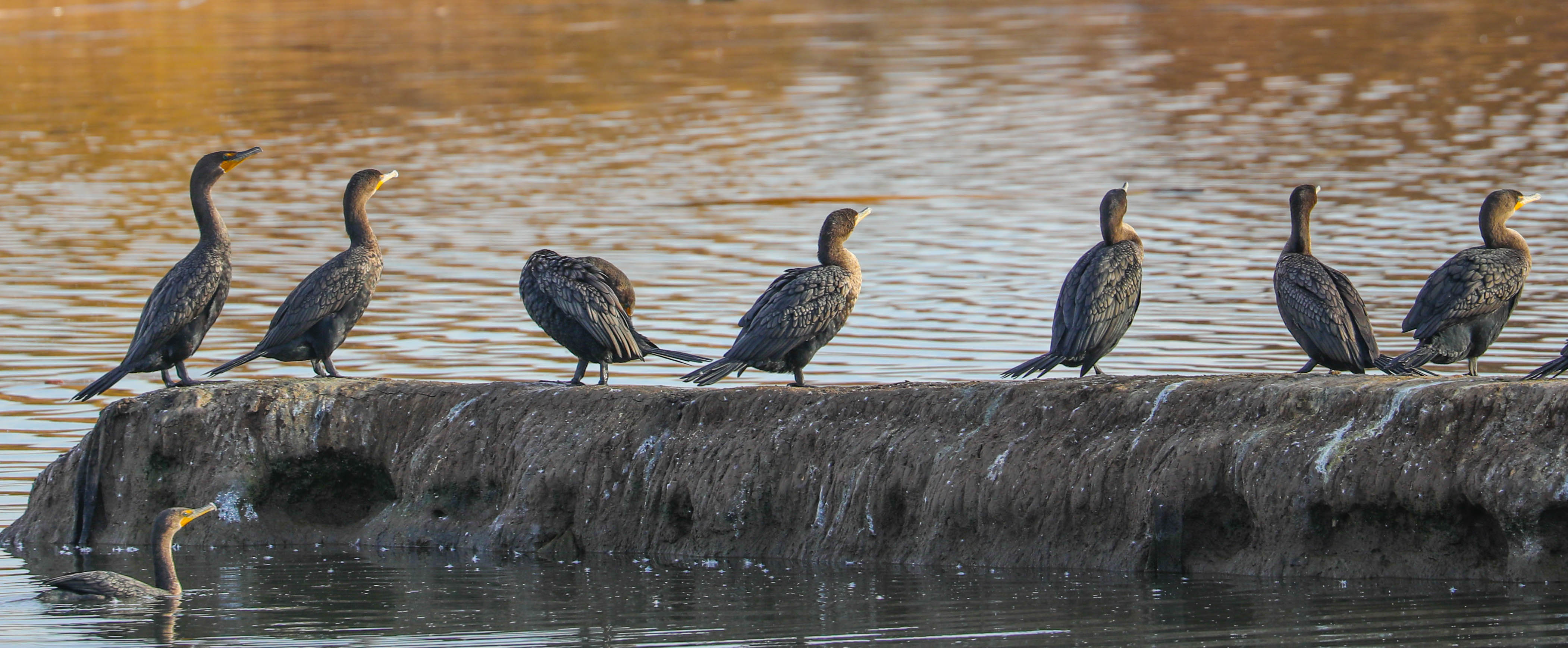
Horeshoe Lake has quite a number of birds, despite fairly heavy fishing activity. I found quite a few American white pelicans all around Horseshoe Lake and lots of double-crested cormorants, particularly at the northwestern end where there is a wall sticking up in the lake that was covered with cormorants both times I visited.


Ducks seemed to be most active and plentiful toward the southeastern end. My first visit I saw mallards, gadwalls, American wigeons, northern shovelers, ring-necked ducks and a pair of hooded mergansers in that area. 
Male hooded merganser


Male and female hooded merganser

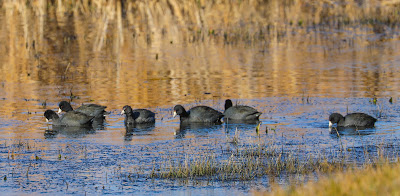
American coot

Gadwall

Mallard

American wigeon

Northern shovelers

Ring-necked ducks
The northern end of Horseshoe Lake borders on a pasture to the north and lots of large dead trees which are magnets for birds. There are also lots of cattails and brush along the sides of the trail that attract small birds. The week before I visited they saw greater white-fronted geese in the pasture and I understand an osprey is often there. I saw a red-tailed hawk there my second week. 
White-crowned sparrow

Song sparrow

Northern mockingbird

Red-winged blackbird

European starling

Phainopepla

Great-tailed grackle
Red-tailed hawk

The northeastern end of Horseshoe Lake has lots of cottonwood trees around Picnic shelters #1 and #2. I saw a sharp-shinned hawk in those trees the first Saturday and a Cooper's hawk in the trees the second Saturday. 
Sharp-shinned hawk

 
Cooper's hawk

Off the northeast end of Horseshoe Lake is a trail that heads north. To the right is a large dry pasture and to the left are wetlands. As you go further north a thick area of trees is on the right and wetlands on the left with lots of ponds and dead trees. 
The northeast end of Horseshoe Lake is visible at the bottom right. 

Wetlands - lots of ponds and scattered trees.


Western bluebirds in the marsh land.

Yellow-rumped warbler

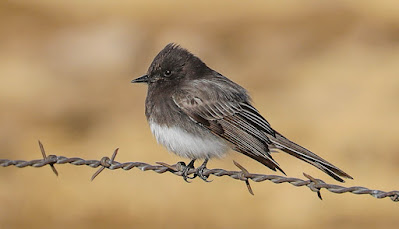
Black phoebe

Northern flicker

Common raven
The pasture land to the right of the trail and beyond the marsh also had some wonderful birds. 
Female vermilion flycatcher.

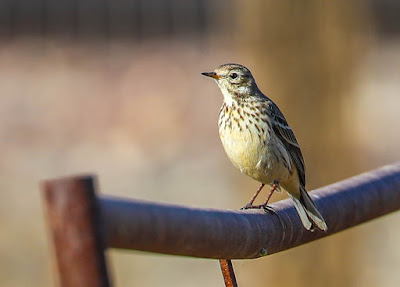
My first American pipit. 


Western meadowlark

Killdeer

Great blue heron. They were also all around Horseshoe Lake. 

My second week, I've already identified some of the birds I saw, but here are some more. 
Only my second sighting of a hermit thrush. 

Canada geese at Horseshoe Lake. 


Red-tailed hawk in the marsh.

A different red-tailed hawk.

A great egret at Horseshoe Lake
Pied-Billed Grebe


Saturday, December 17, 2022

Peru

In February 2009 my partners and our spouses visited Peru for nine days, the first of three trips we all took together, each of them five years apart. 

On Saturday, February 14, 2009, the ten of us met in Redlands where a van picked us up for the drive to Los Angeles where we flew out of LAX at 12:30 p.m. on LAN Airlines. It was a direct flight to Lima which arrived at 12:10 a.m. We got to the JW Marriott very early in the morning, but were able to sleep in. 

Sunday, February 15, we had an afternoon tour of Lima, which included the city center, the government palace, the San Francisco convent, the cathedral and the residential districts of San Isidro and Miraflores. For dinner we ate at Brujas de Cachiche which was marvelous. We stayed again at the JW Marriott for the night. 

Monday, February 16, we flew from Lima to Cuzco on LAN Peru S.A., leaving at 9:25 a.m. and arriving at 10:40 a.m. (my partner, Michael and his wife went to the Sacred Valley by car instead because of altitude sickness issues). We had an afternoon tour of Cuzco which included the Temple of the Sun (Korkancha Temple), the cathedral and its art museum, the artisans quarter of San Blas, San Blas Church, the Inca Fountains (water shrine of Tambomachay), Puca Pucara (the Red Fortress), the amphitheater of Kenko and Sacsahuaman Fortress. We had dinner at Incanto where we tried guinea pig (cuy) and alpaca, which was very good. We stayed at the Libertador Hotel in Cuzco. 
     Food in Peru  (Bob)
 
Tuesday, February 17, we took got on the train early in the morning which went through Sacred Valley, Ollantaytambo train station, where we picked up my partner and his wife, and then continued on to Aguas Calientes. We then took a 30 minute bus ride to Machu Picchu were we had a guided tour and had lunch at the Sanctuary Lodge Hotel near the ruins. We spent the night at Inkaterra Machu Picchu Pueblo in Aguas Calientes. 

Wednesday, February 18, 2009, Judy and I went back to Machu Picchu with my partner, Bill, and his wife, and hiked to the top of Huayna Picchu, with impressive views. We had lunch at our hotel and then took a 3:00 p.m. train back to Cuzco where we stayed the night again at the Libertador Hotel. We ate dinner together at a restaurant in the main square. 
     Where in the World?  (Judy)  

Thursday, February 19, we flew from Cuzco at 10:15 a.m. on LAN Peru S.A. to Puerto Maldonado where we arrived at 11:05 p.m. We stopped at the Inkaterra Butterfly House near the airport, then took a 45 minute boat ride on the Madre de Dios River to the Inkaterra Reserva Amazonica. We had lunch in the dining room, visited the Inkaterra Canopy Interpretation Center where we walked along suspension bridges between 8 platforms in the rainforest canopy and had a nighttime rainforest walk. 
     Brown Aguoti  (Bob)
     Black-Tailed Trogon  (Bob)
     Blunt-Headed Tree Snake  (Bob)

Friday, February 20, we took an excursion to Lake Sandoval in Tambopata National Reserve. We got caught in a downpour and had a real taste of the rain forest. That night we took a boat ride on the Madre de Dios River. 
     Tambopata National Reserve  (Bob) 
     Blue and Gold Macaw  (Bob)
     Hoatzin or Stink Bird  (Bob)
     Black Caiman  (Bob)

Saturday, February 21, we took the boat back up the Madre de Dios River to Puerto Maldonado and flew on LAN Peru S.A. at 12:40 p.m. to Lima where we arrived at 3:20 p.m. We ate at La Rosa Nautica on the oceanfront. We spent a short night at Hotel Costa Del Sol Ramada located at Jorge Chavez Int'l Airport in Lima.  

Sunday, February 22, we left Lima at 1:40 a.m. on LAN Airlines S.A. and arrived at LAX at 7:15 a.m.

Monday, December 12, 2022

Hooded Merganser

The mergansers have become some of my favorite birds. I was at Mojave Narrows Regional Park in Victorville on Saturday and took lots of photos of a male and female hooded merganser. I got some photos of the male's head in different shapes. The female looks completely different than the male. She is a cross between Phyllis Diller and Marg Simpson. 

Here are some photos:

Note that the white hood is much lower than in the first photo and the eye dominates the head in a way that it does not in the first phot. 

The hood is even more dominating in this photo. 


Looking at the head from the behind, the white hood dominates the head. 


Sunday, December 11, 2022

American Pipit

The American pipit is a songbird found on both sides of the northern Pacific: (a) Canada, the U.S. and Mexico on the eastern side (three subspecies) and (b) Russia, Japan and China on the western side (one subspecies), which is also known as the Japanese pipit or buff-bellied pipit. 
It has lightly streaked gray/brown upperparts and diffusely streaked below on the buff breast and flanks. The belly is whitish and the legs and bill are dark. The Japanese pipit is darker above, has bolder black streaking on the underparts and the legs have a reddish hue. 


It is insectivorous and usually found walking on the ground. I saw one in that fashion, but the other was on a metal fence. 

I visited Mojave Narrows Regional Park in Victorville, California yesterday, my first time there, and was very impressed with the varied terrain available. This was the first time I've seen an American pipit. 

Saturday, December 10, 2022

Brazil and Argentina - Covid Shortened

In 2020, from March 10 to 22, we had a wonderful trip to South America planned with Judy's sister and brother and their spouses. It included trips to Iguazu Falls, both Brazil and Argentina; Buenos Aires, Argentina; Colonia del Sacramento, Uruguay; El Calafate, Argentina, including the Perito Moreno Glacier; a drive into Chile to Torres del Paine NP; Punta Arenas, Chile, including Magdalena and Marta Islands; Santiago, Chile; and then home. 

We left Los Angeles (LAX) on Tuesday, March 10, at 9:45 p.m. on LATAM. We arrived in Lima (LIM), Peru about 8:14 a.m. on Wednesday, March 11, and had breakfast at La Nacional in the airport. We had a 12:35 p.m. flight on LATAM to Iguassu Falls, Brazil (IGU), arriving about 6:35 p.m. We were met by Judy's siblings and taken to the San Martin Cataratas Resort & Spa for the night. We had dinner at the hotel, then all got in a car for a drive into Argentina for a "full moon walk" (without any lights) to Iguazu Falls. We took a natural gas powered train that covered 14 km in 25 minutes to reach the Devil's Throat Trail, then walked a .7 mile footbridge to the Devil's Throat. While we were waiting for our drive we heard that the NBA had cancelled their season and that the LDS Church had cancelled Sunday church services because of Covid. We knew that this trip might get tricky. We did not get back to our hotel until about 1:00 a.m. 
     La Nacional - Lima, Peru  (Bob)

Thursday, March 12, we stayed on the Brazil side of Iguazu Falls. The men took a spectacular 18 minute helicopter tour over Iguazu Falls and the women elected not to. Then we took a boat up the Iguazu River to just below the falls and I got drenched, impacting my camera. Then we walked up to the walkways on the Brazil side of the falls and we stopped for lunch and were then taken into Argentina for the night at the Merit Iguazu Hotel in Puerto Iguazu. That evening we had a wonderful dinner at La Rueda (the wheel) and I had one of the best steaks I've ever eaten, smothered in a red chimichurri sauce. At dinner, most of the talk was about concern for the trip. We were scheduled to spend some more time at Iguazu Falls, on the Argentina side, in the morning, then fly to Buenos Aires.
     South American Coati  (Bob)
 
Friday, March 13, Judy's brother Dave heard from an attorney in Buenos Aires during the night that the government had drafted a proposal that called for a mandatory 14 day quarantine for visitors from high-risk countries, including the United States. He told Dave that we should get back to Brazil as soon as possible and then get back to the U.S. That morning we all sat around a table in our hotel and made reservations to get back home, at a cost of $1,184.75 each for a one-way flight. We got a cab to take us back into Argentina. Our driver stopped at Parque das Aves, a rain forest bird sanctuary, to give us an hour there, then took us to Foz do Iguacu International Airport where we had to wait about eight hours for our 8:05 p.m. LATAM flight back to the U.S. We spent at least five hours in a small coffee shop. Our flight out of Brazil was delayed for almost two hours, we left just before 10:00 p.m. Then we had a four hour flight to Lima with two time zone changes, so we arrived there about midnight. We got on a 1:01 a.m. LATAM flight for LAX which was only about one-third full. We sat on the runway for two hours waiting for clearance from LAX to enter U.S. airspace. We took off about 3:00 a.m. and arrived at LAX about 8 1/2 hours later. LAX was a ghost-town. Out of ten luggage carousels, ours was the only one operating. Fortunately we made the move to go home when we did. Our regularly scheduled flights home were cancelled and we would have been quarantined in Argentina for two weeks. 
     Toco Toucan  (Bob) 
     Scarlet Ibis  (Bob)

Thursday, December 8, 2022

Chukar Partridge

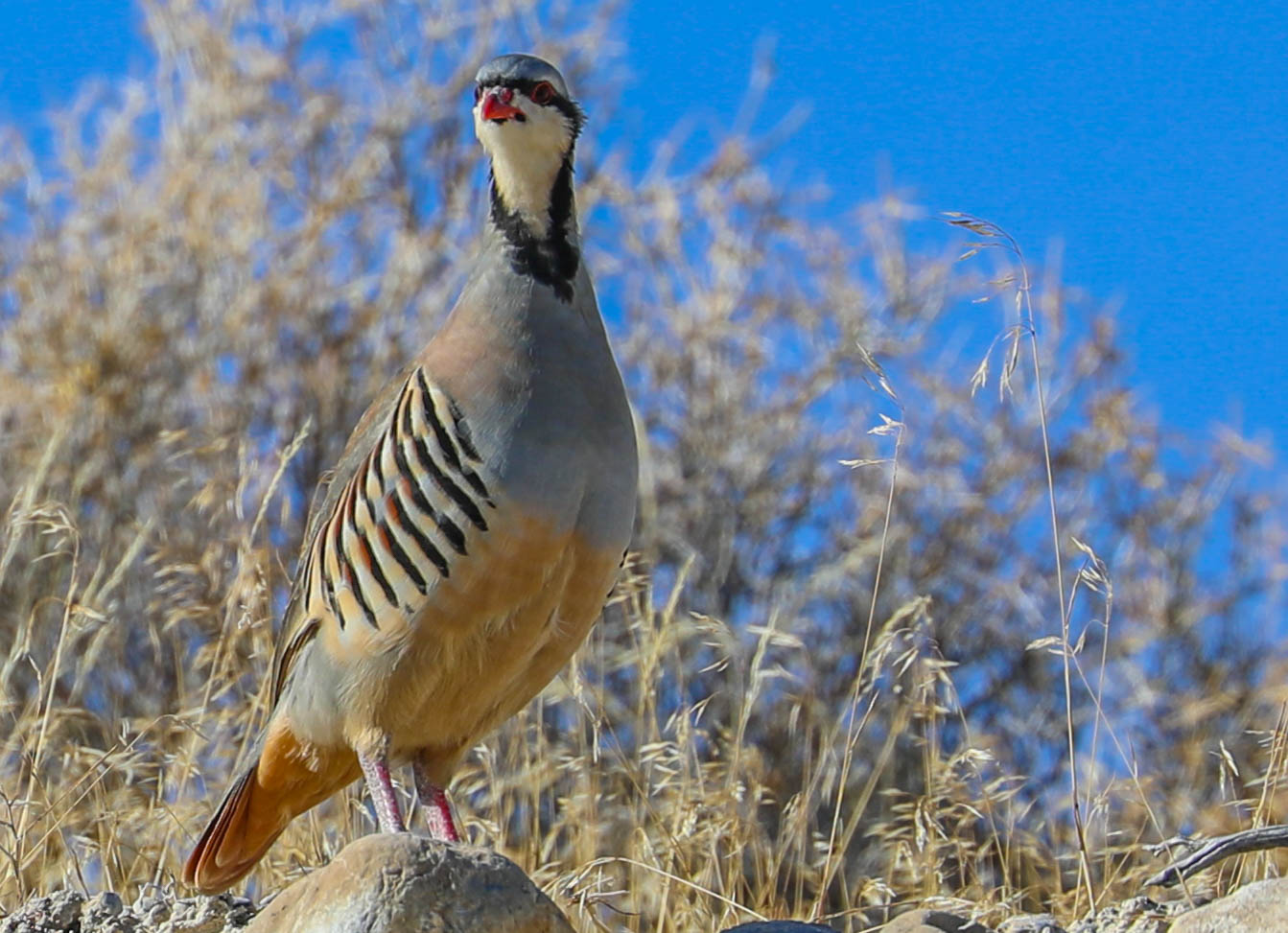
I did a post on the chukar partridge in 2009 based on some chukars I saw at Canyonlands NP in Utah. I also cooked some commercially raised chukars in 2009. Earlier this year I was visiting my daughter in Lehi, Utah and was high up on the mountain to the north and had a great view of a bunch of chukars, but had no camera. Later in the year, on October 20, I visited Fish Springs NWR in remote eastern Utah. As I was leaving a bunch of chukars crossed a dirt road and scampered up a hill. Several posed for me and I got some great shots, the best of chukars I've ever taken. 


They are beautiful birds and a thrill to see in the wild.