Sunday, March 7, 2021

Long-Eared Owl

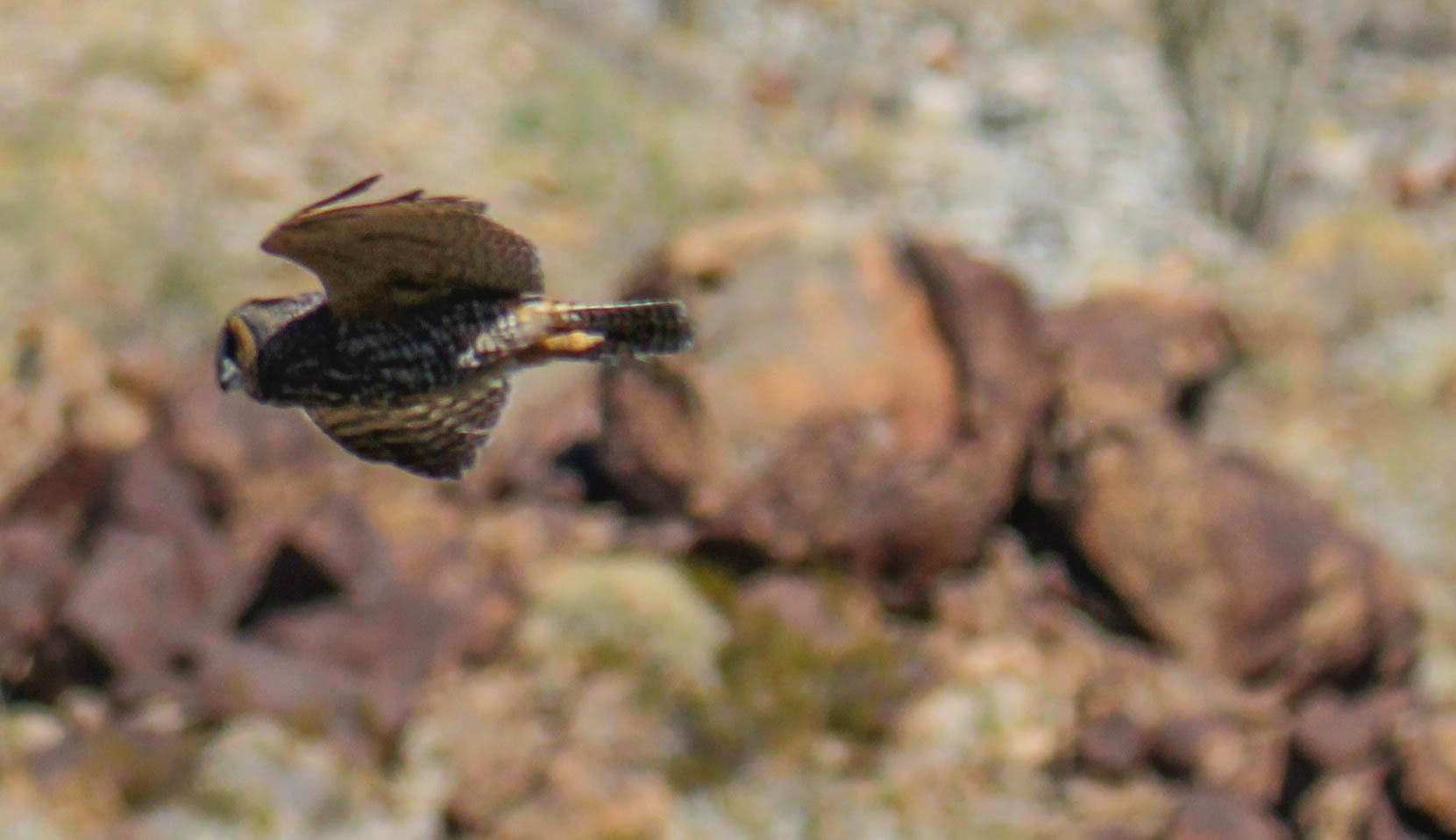
I just had my fourth experience seeing long-eared owls at Corn Springs. In the interim I've learned that they migrate and they often congregate in the same tree. On December 19 I saw at least two, but I believe there were more. I got no photos. On January 16, I believe I saw 18 or 20, and I spent hours cautiously approaching them and taking photos. On February 13 I saw 8 or 10, much fewer and my best photos were taken of them flying. It was later in the afternoon and we didn't have as much time to focus on them. 

On February 28 I visited Antelope Island in the Great Salt Lake with Sam and we found a grouping of four porcupines. While we were looking at them Sam flushed what turned out to be two long-eared owls that I got grainy photos of (I originally thought they were short-eared owls and an interaction on iNaturalist revealed they were long-eared owls).


Then yesterday, March 6, Judy and I took Sam out to Corn Springs and amazingly, there were still about five long-eared owls remaining in the palo verde tree. I'm assuming that they must be migrating in and migrating out singly or in small groups and that this must be near the end. I was only able to get one poor photo of one standing yesterday. 
They flew quickly from both the palo verde tree and the tamarisk tree. But I was able to get some good flying photos. This first set is a grouping of the same owl flying:


This next grouping is of the a different bird with some of the best photos I've gotten, particularly of the face (the last one is out of focus). 


Finally, a couple of groupings that I would normally be thrilled with, but just aren't as good as the foregoing:

and


I'm looking forward to seeing if they come back to the same spot next year. 

Saturday, March 6, 2021

Whistling Swan

The tundra swan is sometimes considered to include two species, the whistling swan and Bewick's swan, but they are usually regarded as subspecies. The plumage of the whistling swan is all white and it has black legs and feet, and a black bill with a thin salmon/pink streak running along the mouthline and a small yellow spot on the black facial skin near the base of the bill in front of the eye (although it is often hard to see or absent). 


Swans that have lived near bog lakes with large amounts of iron ions get head and neck plumage that has a golden or rusty hue. Color variations are common with pink instead of yellow or black, or more or less yellow. 


Immature birds have some dull gray feathering, mostly on the head and upper neck and bills that are mostly pink with a black tip and base and dark gray feet with a pinkish hue. 
They leave for their breeding grounds in the coastal plains of Alaska and Canada by mid-March and arrive by late May. They leave for their winter grounds about October and arrive in November and December. Western Alaska birds winter along the Pacific coast down to California, some moving inland into the Central Valley  as far east as Utah and as far south as Texas and northern Mexico. Those breeding along the Arctic Ocean winter on the Atlantic coast, mainly from Maryland to South Carolina, but some as far south as Florida.  
There were an estimated 170,000 in 1990, but seem to be declining slowly in the west, but increasing somewhat in the east. 
I saw whistling swans at the Bear River Migratory Bird Refuge in northern Utah last weekend, a first for me. Their large black feet stand out as they waddle around and seem particularly beneficial on the ice. 


They are beautiful in flight. 


Friday, March 5, 2021

Muskrat

I've seen one muskrat previously and eaten another on a different occasion (see here). So it was with real delight that I followed the course of this muskrat down a canal at the Bear River Migratory Bird Refuge in northern Utah last weekend, backing up my rental SUV and taking photos in receding light, trying to get clear angles through the tall cattails. 
In all honesty, I was not sure what I was seeing (realize that these photos were taken with a 600 mm lens in dim light and provide a better view than what is was getting through the camera view finder). I thought it might be a beaver, a muskrat, or even an otter. Most of my photos were horrible, but a few are at least recognizable. 
It followed a straight course down the canal for quite awhile. 

They have long, rat-like tails, slightly flattened vertically, covered with scales instead of hair, that they use to propel themselves while swimming. They spend most of their time in water and can stay under water for 12 to 17 minutes. They mostly feed on cattail, which it was swimming between in the canal, as well as small animals.  

Thursday, March 4, 2021

Ruddy Duck

At the Bear River Migratory Bird Refuge in northern Utah last weekend I got a poor photo of a new first, a ruddy duck. 
The ruddy duck is small, has a long stiff tail that is often held upward, has a slightly peaked head and a fairly short, thick neck. In winter they are dull gray/brown above and paler below with a dull gray bill. In summer they have chestnut bodies with bright blue bills.  From photos at All About Birds, it appears that the duck in my photo is partially between a breeding and non-breeding male: the bill is bluish, but not the bright blue of breeding, and the body is not the bright chestnut color of breeding, but more than dull gray/brown. 

Wednesday, March 3, 2021

Red-Winged Blackbird

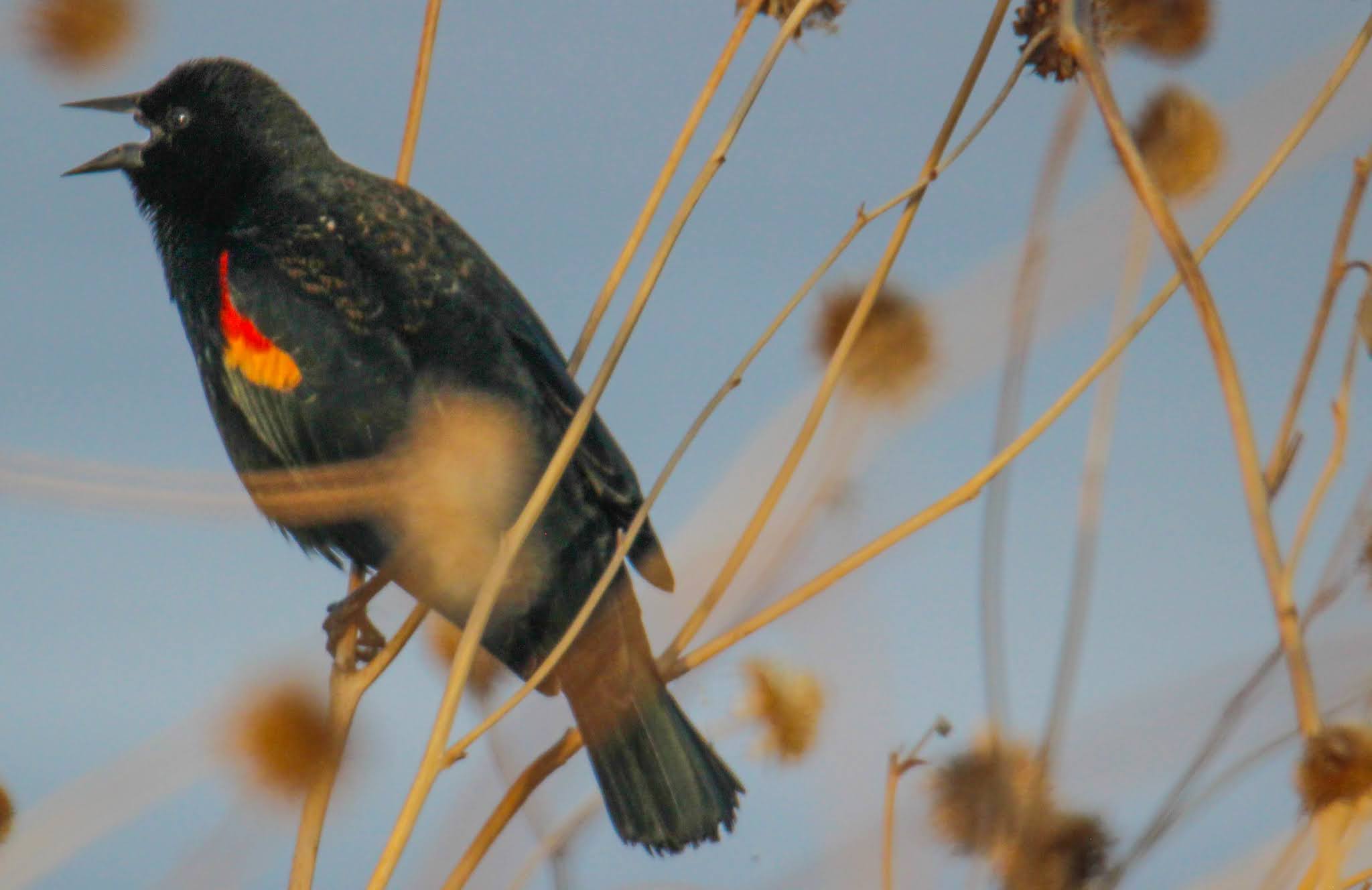
I got some nice views of a red-winged blackbird at the Bear River Migratory Bird Refuge in northern Utah over the past weekend. I've posted once before on a red-winged blackbird I saw in Florida. They are beautiful to look at and to listen to, one of my favorite birds. 
Although the head is partially obscured, I love the view of the color on both shoulders while it is singing. 


Tuesday, March 2, 2021

North American Porcupine

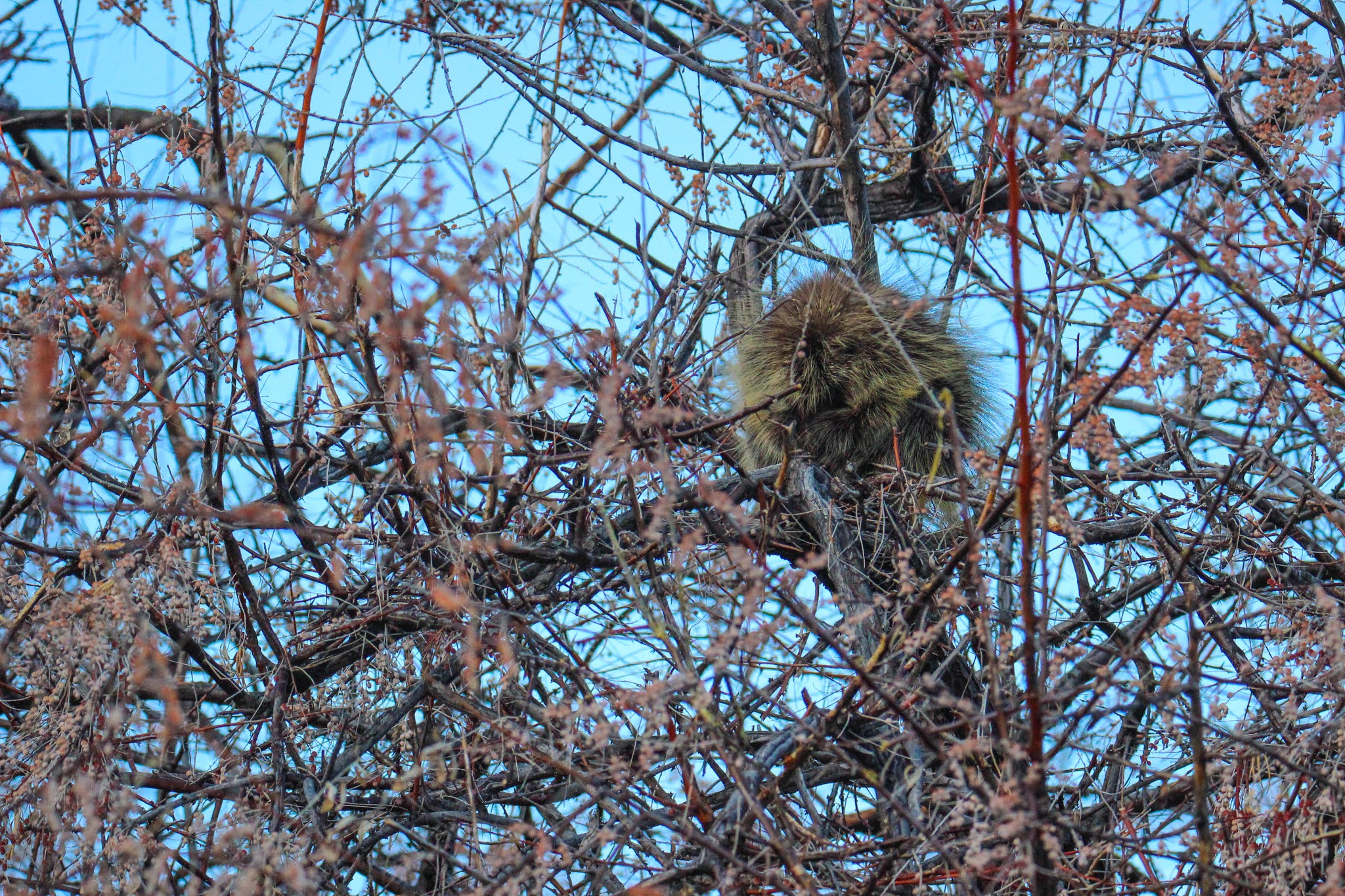
My son, Sam, and I visited Antelope Island in the Great Salt Lake on Sunday, February 28. It was early in the morning, about 7:15 or 7:30 a.m. and about 30 degrees. As we drove the road on the east side of the island I spotted what I believed was a porcupine in a tree. The tree had no leaves so the porcupine really stood out, a big lump among empty branches. We got out and took a look and it was clearly a porcupine, but no sign of movement - it was battened down for the cold. 

Then Sam looked in a tree just to the north and said, there's another one. Sure enough, about 30 yards away, was another porcupine lodged in a tree. 

Then a short while later one of us spotted another porcupine in a tree further west. 

Later, as I want down an embankment and through some large reeds to get a closer look at the third porcupine, I spotted a fourth porcupine in another nearby tree. 

None of the views were great, but it was a thrill to see four altogether in one area. I've never seen more than one at a time.