Tuesday, February 16, 2021

Western Meadowlark

The western meadowlark is a bird I remember from my youth in the foothills overlooking City Creek Canyon in Salt Lake City. My father used to tell me that it's song was, "Salt Lake City is a pretty little place." 
I'd not seen one in years until just recently in Live Oak Canyon. I was perplexed in trying to recognize it. I'd not had a view of its yellow breast, all I was seeing was a long pointed bill with some yellow above the eye and on the throat and a stripe through its eye. 
It has yellow underparts, a black "V" on the breast (pale yellow and a faint brown "V" in non-breeding birds) and white flanks streaked with black and white outer tail feathers. The upperparts are mostly brown, but have some black streaks. It has a long pointed bill and a head striped with light brown and black bands. 

Monday, February 15, 2021

Long-Eared Owl

We visited Corn Springs with Judy's brother Dave and his wife Bonnie on Saturday, February 13. We'd previously visited Corn Springs with Andrew and Michaela on December 19 and I visited alone on January 16. Both previous times I saw long-eared owls, the first time thinking they were great-horned owls and getting no photos and the second time seeing substantially more owls and getting lots of photos. This time was much later in the afternoon on a cloudy day, so lighting conditions were not as good and we didn't have as much time. 

Dave and I approached the palo verde tree and I was happy to see the first owl fly. That means they've been using the same tree for at least two months. Gradually more owls flew, but it was not as large a group as last time, but more than the first time. So I assume that the migrating owls came individually or in small groups to share the same tree and probably also leave individually or in small groups.

I was much better at spotting the owls, but they were quicker to fly than in January when I was able to get some good photos of them in the palo verde tree. This time there was one owl that did not flush, even as we went under the palo verde tree. It was well camouflaged behind some branches and we were within five yards or so, so well camouflaged that none of my photos were even remotely decent. 

A wind was blowing and the upper branches of the tamarisk tree were swaying. The owls we were able to photograph were higher in the tamarisk tree than in January, but they were also less skittish. The following photos are all from the tamarisk tree. 


In an effort to get some flight photos I positioned myself just below the tamarisk tree on a small rise and had Dave go into the palo verde tree to flush the owls out after we'd flushed most of the owls out of the tamarisk tree and back to the palo verde tree. He finally flushed that last owl we'd seen previously by going right up to it and I think that it was that last owl that gave me the best front-on photo as it flew straight for me then veered off. 
This is my favorite photo - I just wish it was more in focus. This is the owl flying right at me with the hill on the other side of the wash in the background. The wings are incredibly long. 
These other photos show an owl in various stages of flight. 


I was able to get one photo of an owl I like out of the palo verde tree, basically a shadow of the owl masked by the branches of the palo verde tree. 
I am going to include two more flight photos that I was originally going to leave out. One is a horrible photo of the owl but has a rocky backdrop and the other is also a poor photo with a palm leaf backdrop. 

Sunday, February 14, 2021

El Pecado - Coachella, CA

Since Covid our restaurant outings have been few and far between. But we recently ate outdoors at a great Mexican restaurant after we visited the Salton Sea, El Pecado at the far-end of the Coachella Valley, in Coachella, California. "Pecado" is "Sin" in Spanish and the sign represents (at least to me) Dia de los Muertos or Day of the Dead and indicates they serve crafted Mexican food. Because gluttony is a sin I think the name is well deserved because when I eat there I become a glutton. 
It had been a beautiful, sunny late January day and we were seated outside under some large umbrellas. I got a house-made blueberry lemonade which was freshly made lemonade with pieces of blueberry floating around in it and actually had a blueberry taste as well - very good. 
First we got a bowl of tempura cauliflower bites: large chunks of cauliflower breaded and fried and sprinkled with cotija cheese and lathered in what I think was Frank's RedHot cayenne pepper sauce with a small side cup of a mayonnaise based cajun-type sauce. Bits of purple cabbage were garnish. Loved it, the cauliflower was soft and the spice was good.
Next we had chikibabi taquitos with potato. They had sour cream and guacamole flowing over and around them like leaking mudpots or cone volcanoes, a wonderful look. The taste was very mild, much better when adding some Frank's from the prior dish. It also came with picked carrot and onions, iceberg lettuce and red and green salsa. It looked wonderful, but was very mild and okay. It also came with beans and rice which were very good. 


Next we got two each of three kinds of tacos. The best were the ones we tried first, calabaza or squash, I believe squash flower, grilled with onion, corn and salsa verde. These were amazing. I would drive all the way there for just those. Perfect size, perfect amount of filling, large enough to satisfy. Perfect taste, perfect in every way. 
Next were two nopales tacos, nopales being the paddle portion of a beavertail or similar type cactus, with red pepper, onion and cotija cheese. Also very good. 
Finally we got rajas, or poblano tacos. They included onion, corn, sour cream, a white cheese and some purple cabbage garnish. The texture was incredible but I found the taste a little bitter - but that is poblano. 

Yesterday we visited Corn Springs with Judy's brother Dave and his wife, Bonnie. We were driving through the Coachella Valley and did a detour to El Pecado. They were out of blueberry lemonade but had an orange drink with chia. I think it was even better than the lemonade. 

I ordered nachos without meat, but added quacamole. The presentation was wonderful with a volcanic effect of green lava moving down the chips. The chips were very large and crunchy and the nachos were amazing. I would order it again. Lots of cheese and guacamole. 

We also ordered the cauliflower bites again and they were as good or better. I also got the squash taco and a poblano taco again (I got one for Judy thinking she wanted one, so I ended up eating two). This time I preferred the poblano taco, by a long shot. 

El Pecado is going to be on my visitation list. It is expensive but well worth it. 

Wednesday, February 10, 2021

Sonny Bono Salton Sea National Wildlife Refuge

The Sonny Bono Salton Sea NWR (the "Refuge") is found in Southeastern California at the southern and southeastern end of the Salton Sea. 
The Salton Sink is a closed drainage area which separates the Coachella Valley from the Imperial Valley and has alternately been a lake and a dry lake bed as the channel of the Colorado River has changed off and on over time from the Gulf of California to the Salton Sink. 3,000 years ago the Salton Sink was covered by Lake Cahuilla that was 105 miles long and 300 feet deep. In 1905, when the Salton Sink was dry, the Colorado River flooded through two dry arroyos creating the New River and the Alamo River and for two years these new rivers carried the entire flow of the Colorado River into the Salton Sink and created the Salton Sea. This flooding was eventually controlled by human intervention and the Colorado diverted back to the Gulf of California. 

The resultant Salton Sea, much smaller than the previous Lake Cahuilla, has a surface area of 343 square miles, but is still the largest lake in California. It is up to 35 miles long and 15 miles wide, has an average depth of 31 feet and a maximum depth of 51 feet.  The lake surface is 236 feet below sea level and the low point of the lake floor is only 5 feet higher than Badwater, the low point of Death Valley NP. Three streams feed into it: (a) the Whitewater River with headwaters in the San Gorgonio Wilderness of the San Bernardino Mountains feeds the northern end, mostly through the porous desert floor, but occasionally above ground during flooding; (b) the Alamo River, which supported part of the Colorado River flow from 1905 to 1907, flows from the Mexicali Valley in Baja California through the Imperial Valley into the southern end and is mostly a ravine full of vegetation with a small water-course at the bottom; and (c) the New River, which also supported part of the Colorado River flow from 1905 to 1907, flows from the Cerro Prieto Volcano southeast of Mexicali, through Mexicali and Calexico into the southeastern end and is now mostly agricultural runoff, municipal discharge and industrial wastewater and is severely polluted. The Salton Sea has no outlet and loses water only through evaporation. The dissolved salts left behind raise salinity and it now has a salinity 25% higher than the ocean. 

The Refuge currently consists of about 2,200 acres and has two units separated by 18 miles. Each unit has managed wetlands, tree rows and agricultural fields. There are 826 acres of wetland flooded with water from the Imperial Irrigation District. Tree rows include honey mesquite, screwbean mesquite, blue palo verde, fairy duster, sweet acacia and desert ironwood. There are 869 acres of croplands which include alfalfa, wheat, rye grass, milo and sudan grass to provide forage for wintering geese and other migratory birds. 

Unit 1, off Verdel Road at the south end of the Salton Sea, has the half-mile Michael Hardenberger Trail which goes to a freshwater pond that is a favorite nesting area for the endangered Yuma clapper rail. The New River enters the Salton Sea at this Unit.  
Unit 1

An observation deck next to the parking area. 

Another observation deck, further north, viewed from the above observation deck. 
Reeds along the Hardenberger Trail.

Freshwater pond. 

Blind at the freshwater pond. 

An observation deck which has been closed off due to lack of water. The first observation deck is in the left background. 

Sandhill cranes

Ross's geese mix with snow geese. 

Blue morph snow goose.

Ross's goose

Great egret

Black-necked stilt

Great blue heron

Green heron

Northern shoveler
Unit 2, which includes the visitor center, is at the southeastern side of the Salton Sea and has the two mile roundtrip Rock Hill Trail which goes to the top of Rock Hill. The Alamo River enters the Salton Sea at this Unit. 
Snow geese dot a green field with the visitor center (back center), observation deck (back right) and a geothermal electricity plant pushing out steam (far back) behind them. 

More of the agriculture field further north of the visitor center. 

Tree rows and the Rock Hill Trail.

Rock Hill in the background.

Rock Hill

View of the south end of the Salton Sea from Rock Hill. 

View of a more northern portion of the Salton Sea from Rock Hill. 

Snow covered mountains across the Salton Sea. 

Man-made islands in a freshwater pond provide safe nesting sites from marauding raccoons, coyotes and skunks. 

Snow geese

Snow geese

Snow goose

Snow goose

Blue morph snow goose

Great egret

White-crowned sparrow

Northern mockingbird
Additional wildlife I've seen since this first post:
Gambel's quail

Mourning dove

Greater yellowlegs

Anna's hummingbird

Common ground dove

European starling

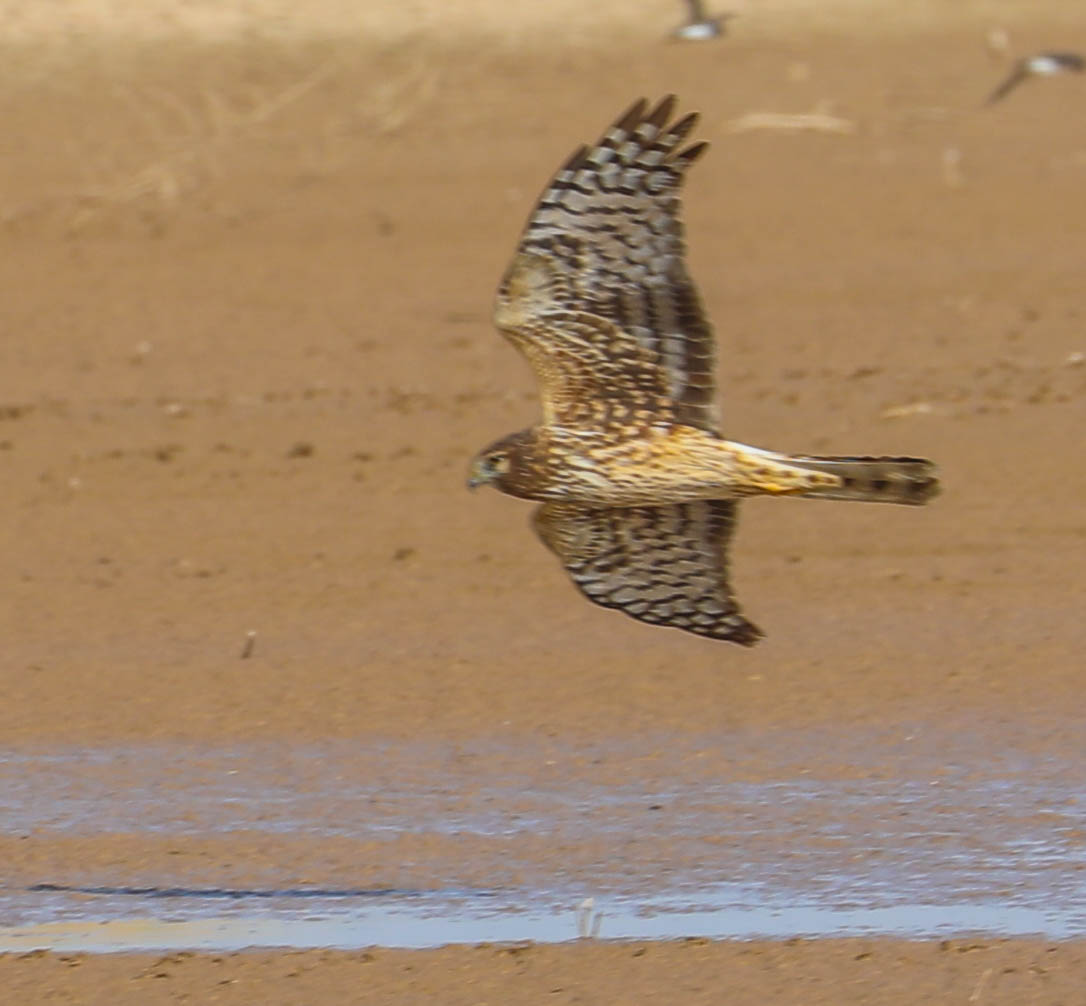
Northern Harrier

Northern shoveler

Peregrine falcon

Red-winged blackbird

Ruddy duck

Savannah sparrow

Yellow-rumped warbler

Verdin

Killdeer

Long-billed dowitcher

Double-crested cormorant

Marbled godwit

Greater yellowlegs

Yellow-footed gull

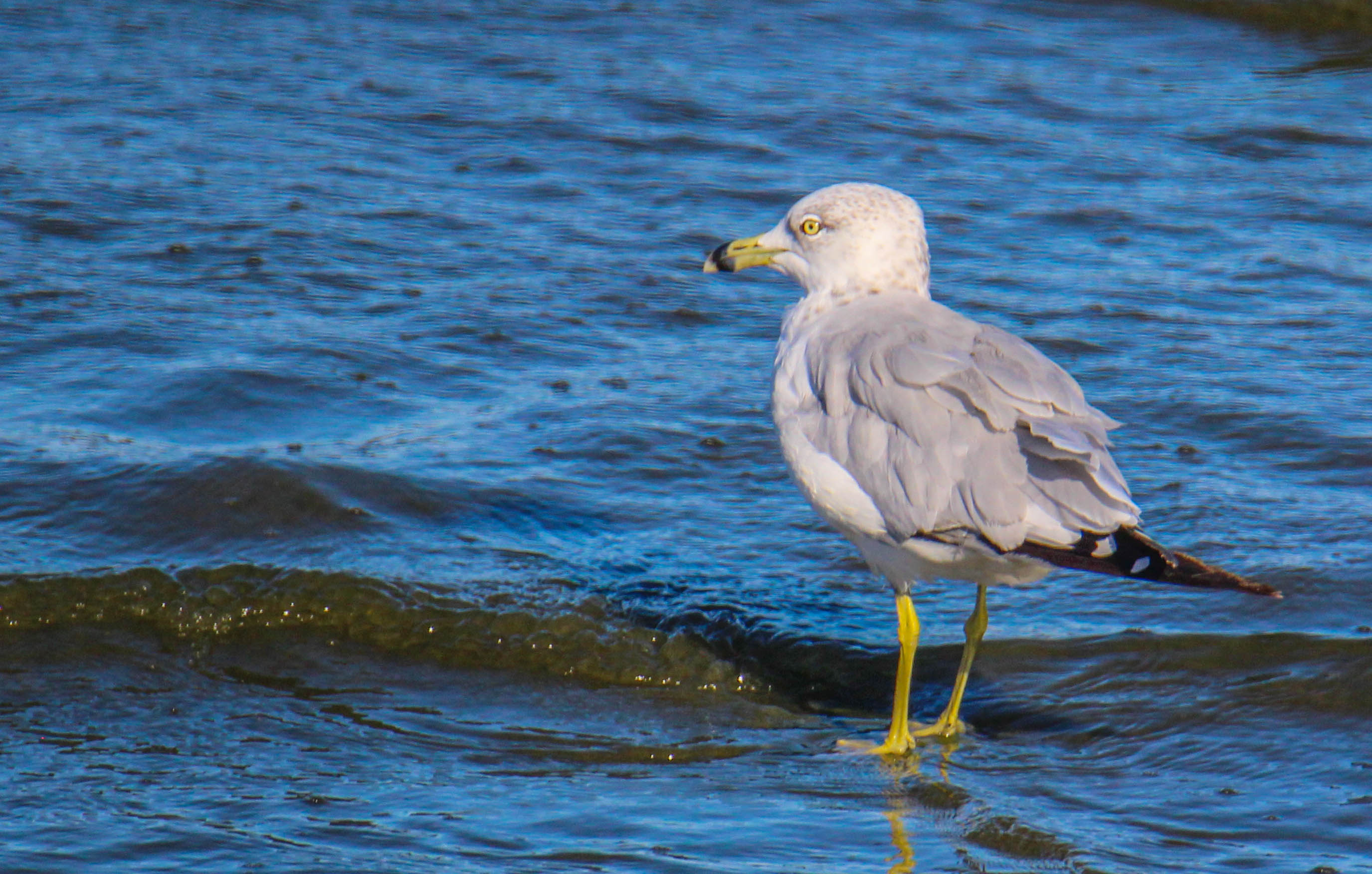
Ring-billed gull

Caspian tern

Least sandpiper

Osprey

Western sandpiper

Say's phoebe

Black phoebe

Burrowing owl

Western meadowlark

Belted kingfisher

White-faced ibis


Sandhill cranes


American kestrel

Harris hawk

Red-tailed hawk

Great-tailed grackle

Gambel's quail

White-winged dove